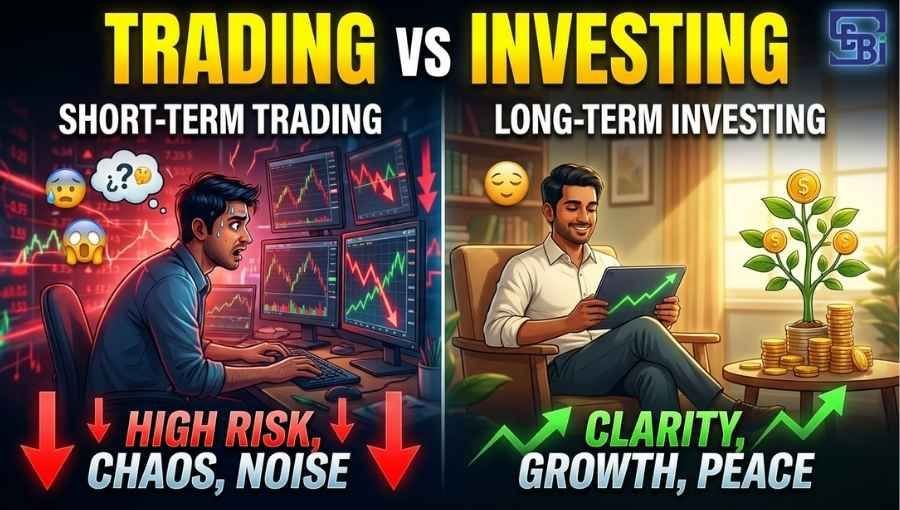
Many beginners enter the stock market hoping to make quick profits through frequent buying and selling of stocks. Short-term trading often appears attractive due to stories of fast gains and daily market movements. However, this approach can be risky, especially for those who are still learning how the market works.
Is Long-Term Investing Safe?
Long-term investing takes a different approach. Instead of focusing on short-term price fluctuations, investors hold shares of strong companies for years and benefit from business growth and compounding returns.
Understanding why long-term investing is generally considered safer can help beginners make more informed financial decisions.
Understanding the Difference Between Trading and Investing
Before exploring the advantages of long-term investing, it is important to understand how it differs from trading.
| Factor | Short-Term Trading | Long-Term Investing |
|---|---|---|
| Time Horizon | Minutes to months | Years or decades |
| Focus | Price movements | Business growth |
| Risk Level | Higher | Lower |
| Time Commitment | High | Moderate |
The key difference is simple: trading depends on timing the market, while investing depends on the long-term success of businesses.
The Power of Compounding
One of the biggest advantages of long-term investing is compounding.
Compounding occurs when your investment returns generate additional returns over time.
Simple Flow:
Initial Investment → Returns → Reinvestment → Compounding Growth
The longer an investment stays in the market, the greater the potential impact of compounding.
Time plays a crucial role in building wealth.
Reduced Impact of Market Volatility
Stock prices can fluctuate significantly in the short term due to:
- Economic news
- Global events
- Investor sentiment
For traders, these fluctuations create both opportunities and risks.
Long-term investors, however, are less affected by short-term volatility because they focus on long-term growth.
Even major exchanges like the National Stock Exchange (NSE) experience short-term fluctuations, but long-term trends often reflect overall economic growth.
Lower Transaction Costs
Frequent trading involves higher costs such as:
- Brokerage fees
- Taxes
- Exchange charges
| Approach | Transaction Frequency | Cost Impact |
|---|---|---|
| Trading | High | Higher costs |
| Investing | Low | Lower costs |
Over time, reducing transaction costs can significantly improve overall returns.
Emotional Stability in Investing
Short-term trading can be emotionally demanding due to constant price movements.
This often leads to:
- Panic selling
- Impulsive buying
Long-term investing reduces emotional pressure because the focus is on business fundamentals rather than daily price changes.
Successful investing requires patience and discipline.
Example from the Indian Market
Many investors who held shares of Reliance Industries for long periods benefited from its expansion across sectors such as energy, telecom, and retail.
This example shows how long-term investing can reward patience and understanding of business growth.
When Short-Term Trading Can Be Risky
Short-term trading requires specialized skills such as:
- Technical analysis
- Chart reading
- Market timing
Predicting short-term price movements is difficult, even for experienced traders.
Without proper knowledge and discipline, trading can become speculative rather than strategic.
A Balanced Approach for Beginners
Some investors choose to combine both strategies.
Example Allocation:
| Investment Type | Allocation |
|---|---|
| Long-Term Investing | 80–90% |
| Short-Term Trading | 10–20% |
This approach allows beginners to focus on long-term wealth creation while gaining limited exposure to trading.
Beginner Investor Checklist
Before choosing your investment approach, consider the following:
- Understand the company’s business model
- Invest with a long-term mindset
- Diversify investments
- Avoid emotional reactions to market changes
- Continue learning about financial markets
Key Takeaways
| Aspect | Long-Term Investing | Short-Term Trading |
|---|---|---|
| Stability | Higher | Lower |
| Risk | Moderate | High |
| Effort Required | Moderate | High |
| Suitability for Beginners | More suitable | Less suitable |
Final Thoughts
Trading and investing are two different approaches to the stock market.
- Trading focuses on short-term opportunities and requires constant monitoring
- Investing focuses on long-term growth, patience, and compounding
For most beginners, long-term investing offers a more stable and manageable path.
The most successful investors often focus less on predicting short-term price movements and more on holding strong businesses over time.
FAQs
Is long-term investing safer than trading?
It is generally considered safer because it focuses on long-term business growth.
How long is long-term investing?
Typically, several years or even decades.
Can beginners start with trading?
Yes, but many experts recommend starting with investing first.
Why is compounding important?
It helps investments grow exponentially over time by reinvesting returns.
Disclaimer: The information provided on Finance Tadka is for educational and informational purposes only and should not be construed as financial, investment, or trading advice. We are not SEBI-registered investment advisors. The content published on this website is not a recommendation to buy, sell, or hold any securities or financial instruments.।