Borrowing money is easy. Choosing the wrong way to borrow is expensive.
Many people don’t realize how much extra they pay in interest until it’s too late. A small difference in interest rate can quietly cost hundreds, or even thousands over time. That’s why understanding the difference between a personal loan and a credit card matters before you borrow.
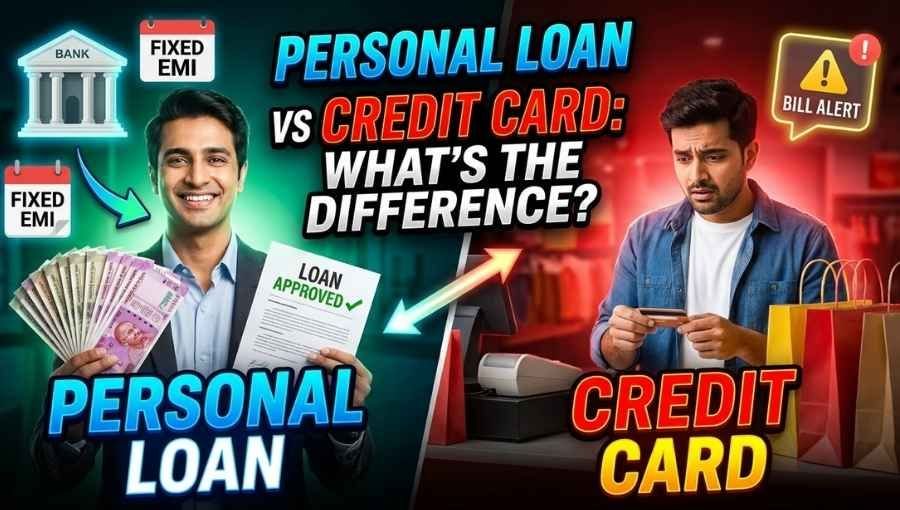
Personal Loan vs Credit Card
- Personal loans usually have lower, fixed interest rates
- Credit cards often have higher, variable rates
- Personal loans are better for large amounts and longer repayment
- Credit cards work for short-term borrowing or 0% offers
Why This Matters
- High interest can double your repayment cost
- The wrong choice can trap you in long-term debt
- Fixed payments can reduce financial stress
- Smart borrowing decisions protect your cash flow
Core Difference
A personal loan gives you a fixed amount of money with a fixed interest rate and set monthly payments.
A credit card gives you a flexible credit limit, but interest applies if you carry a balance.
Interest Rates Comparison
- Average APR (Good Credit):
- Personal Loan: 11%–15%
- Credit Card: 20%–24%
- Average APR (Fair Credit):
- Personal Loan: 18%–28%
- Credit Card: 25%–30%
- Lowest Possible Rates:
- Personal Loan: Around 6%
- Credit Card: 0% introductory APR (limited time)
- Rate Type:
- Personal Loan: Fixed
- Credit Card: Variable
$5,000 Borrowed for 24 Months
| Personal Loan | Credit Card | |
|---|---|---|
| APR | 12% | 22% |
| Monthly Payment | $235 | $258 |
| Total Interest | $640 | $1,192 |
| Total Cost | $5,640 | $6,192 |
Difference: $552 saved with a personal loan
When a Credit Card Makes More Sense
- You can pay off the balance within a 0% intro APR period
- The amount is small (under ~$1,000)
- You want cashback or rewards on spending
- You can repay within a few months
When a Personal Loan Is Better
- You need more than $3,000–$5,000
- You need more than 12 months to repay
- You want fixed, predictable monthly payments
- You are consolidating multiple debts
- You qualify for lower interest rates
Impact on Beginners
Many beginners choose credit cards because they’re easy—but without a clear payoff plan, high interest can quickly build up.”
A personal loan can offer more structure and predictability, which helps beginners manage repayments better.
Common Mistakes to Avoid
- Carrying credit card balance long-term
- Ignoring interest rates
- Choosing based on convenience
- Missing payments
- Not comparing options
Key Takeaway
- Short-term + small amount → credit card
- Long-term + larger amount → personal loan
- No repayment plan → both become expensive
Final Conclusion
The difference between a personal loan and a credit card is not just flexibility—it is cost. Choosing the right option depends on how much you borrow and how quickly you can repay. This article is for educational purposes only and does not provide financial advice.
FAQs
Is a personal loan cheaper than a credit card?
Often yes, especially for larger amounts and longer repayment periods.
Can I use a credit card instead of a loan?
Yes, but high interest makes it expensive if not paid quickly.
What is the biggest risk?
Carrying a balance without a clear payoff plan.
Do rates stay fixed?
Personal loans usually have fixed rates, while credit card rates can change.
Disclaimer: The information provided on Finance Tadka is for educational and informational purposes only and should not be construed as financial, investment, or trading advice. We are not SEBI-registered investment advisors. The content published on this website is not a recommendation to buy, sell, or hold any securities or financial instruments.।